
Frequently asked questions
How much data can I extract at a time?
Bulk scraping in the cloud takes up to 10,000 URLs per recipe, and you can run as many recipes at once as you need. Requests through the API have no concurrency limit. See Bulk scraping in the cloud.
Can you scrape the data for me?
Yes. Use a ready-made recipe for popular websites, or reach out via chat and we will build a custom solution and deliver the data to you.
What are scrape recipes?
A recipe is a saved set of instructions for one website: the page URL and the selectors that point at the data you want. Run it again at any time to get fresh data. You create recipes in the Chrome extension, by pasting a URL on the dashboard's Scrape page, with Smart Extract or through the API.
Can Simplescraper scrape behind a login?
Yes. Browser scraping uses your own logged-in session. Cloud recipes log in with cookies or saved credentials: see Scraping data behind a login.
How do credits work?
Browser runs of up to five pages use no credits. A page scraped in the cloud uses 2 credits with JavaScript enabled and 1 without. New accounts start with 100 credits, and paid plans renew credits each month. Full rates are on the Credits page.
How long are scrape results stored?
Results from each run are kept for 30 days. A recipe's dataset keeps growing beyond that window. To keep anything else for longer, download it or send it to an integration such as Google Sheets. See Data retention.
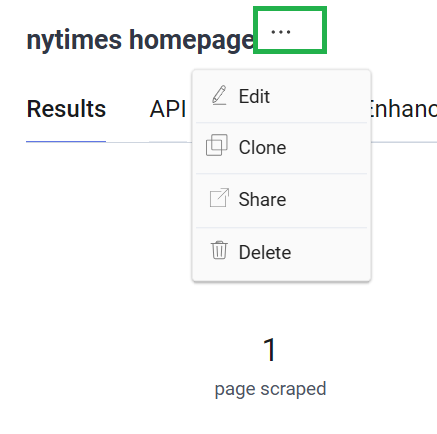
How do I edit, share, clone or delete a recipe?
Click the three dots beside the recipe name on any recipe page.
How do I scrape links and image URLs?
Select a link or an image and its URL appears in the results automatically. If a URL is missing, save the recipe and run it in the cloud.
How do I scrape multiple pages and infinite scroll?
In the extension, click 'More pages' and Simplescraper finds the next page for you; choose 'Load more' or 'Scroll' for pages that load more items as you scroll. Saved recipes paginate and scroll in the cloud too. See Multiple page and infinite scroll.
How do I scrape a list of links and then each page they link to?
Use deep scraping: one recipe collects the links and a second recipe scrapes each linked page. See Deep scraping URLs. To scrape a list of URLs you already have, see Bulk scraping in the cloud.
Where do I find my recipes?
In the dashboard, or in the 'My recipes' tab of the extension.
Does Simplescraper use proxies?
Yes. Simplescraper rotates IP addresses automatically so scrapes get through.
Does Simplescraper rate-limit requests?
Yes. Simplescraper scrapes responsibly: one scrape job loads a site about as much as a handful of people browsing it.
For questions or help, reach out via chat.